♠ Article Library ♦ Board Gallery
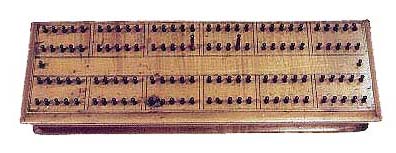 The Hedgehog Board pegs pull up. There are no holes in this type of board.
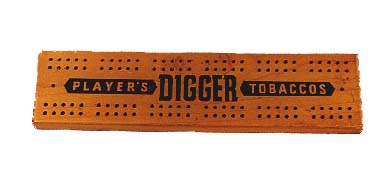
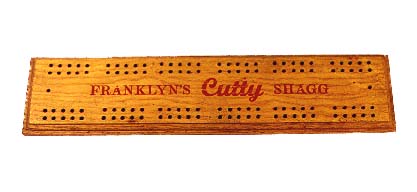
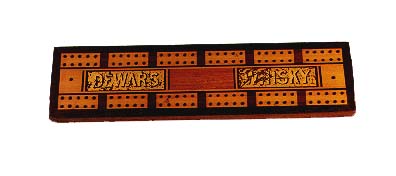
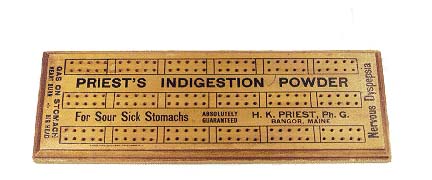 Many commercial companies labeled boards for giveaways to customers.
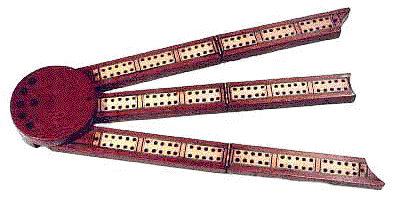 Individual arms of this board are used for each of the three peggers.
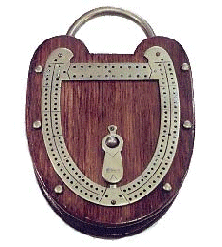 Shaped like a lock, the handle pulls out to reveal a drawer for cardsand pegs.
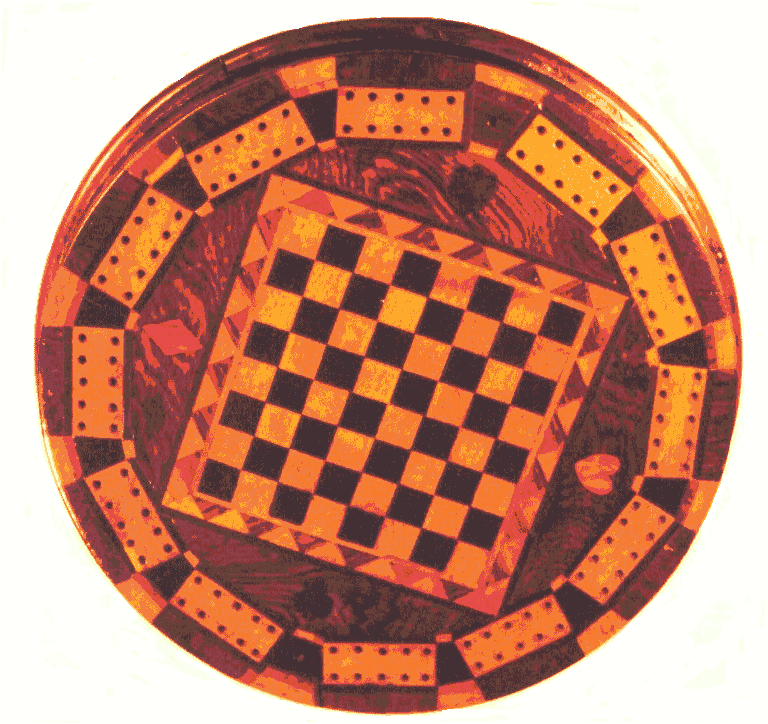 Miniature table with Cribbage and Chess/Checkers.
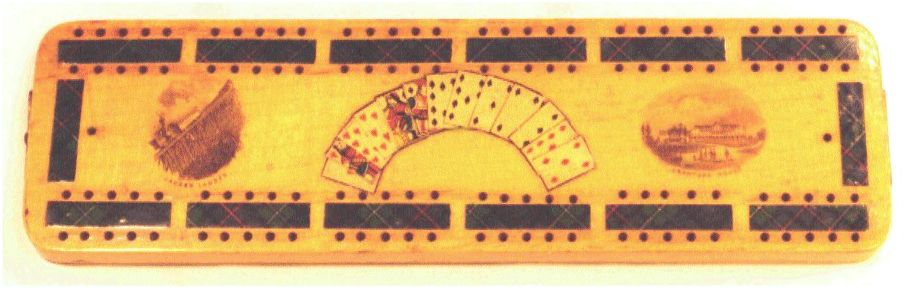 Design is made of paper glued to board and transfers like a Decalcomania. Engraved deck of cards.
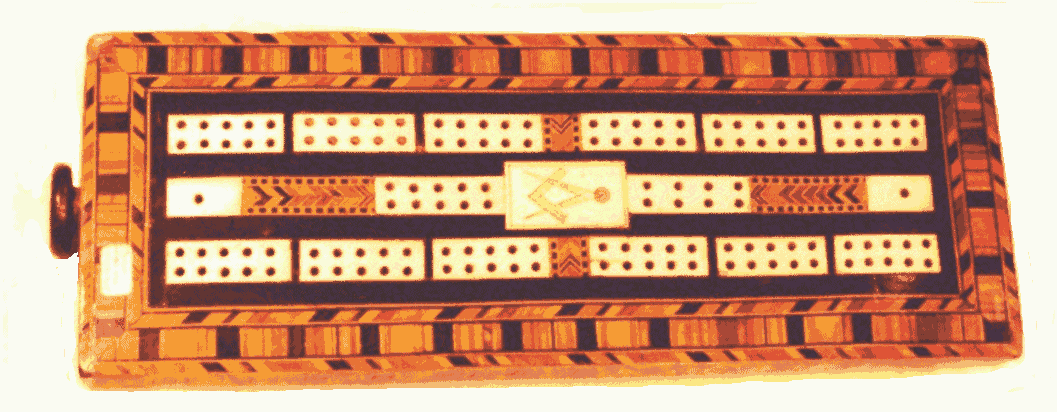 Dated 1810 - 1820 with Masonic emblem.
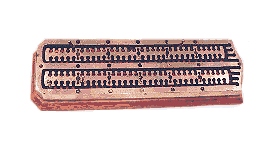 Pegs can not be removed from Board. Pegs slide out, moved the correct number of points, and slide back in.
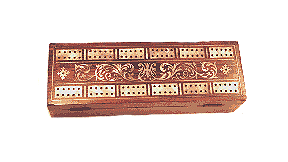 Case opens for storage of cards and pegs.
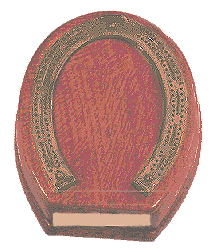 Silver horse shoe with name plate.
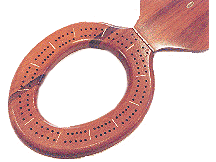 Toilet shaped board that probably reflects the way we play some days.
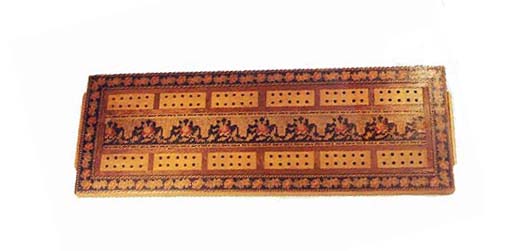 This board dates back to the 1840s.
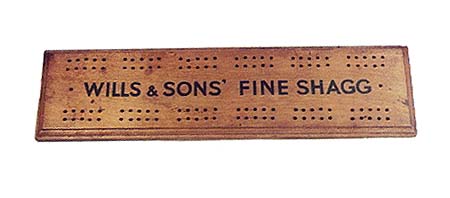 Promotional handout distributed by Wills & Sons.
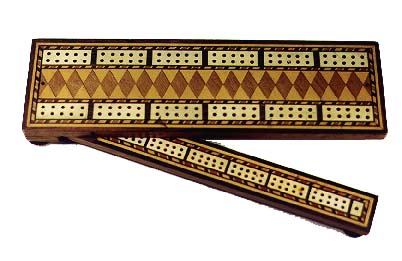
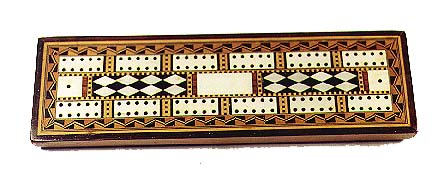
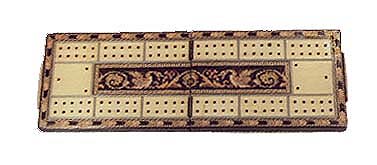 This board has an Italian wood mosaic.
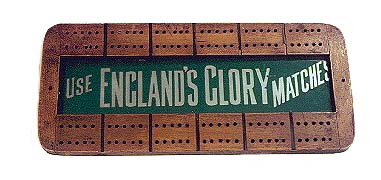 This board is made of wood and glass.
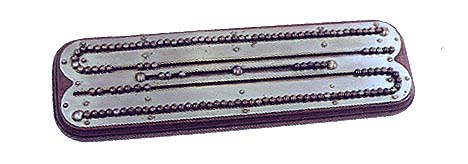 This board is metal and wood. The "pegs" slide like an abacus.
 This board allows for three players and has a case.
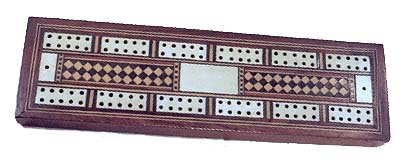 This "common" board is made of wood and has a unique design.
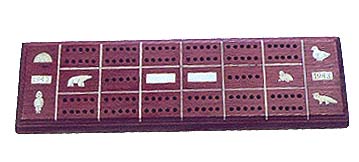 Dated 1942/1943 this wood board is inlaid with ivory.
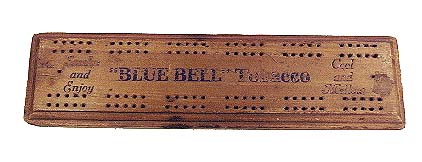 "Blue Bell" Tobacco - Smoke and Enjoy - Cool and Mellow.
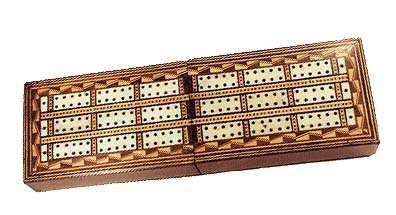 Wooden inlaid board that folds for travel.
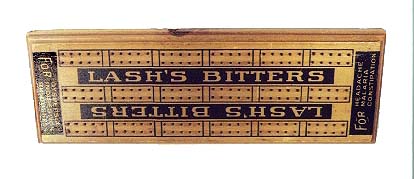 How many of you remember this brand name?
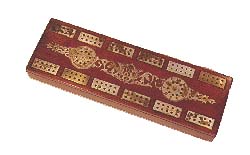 The circular areas are used to keep track of games won.
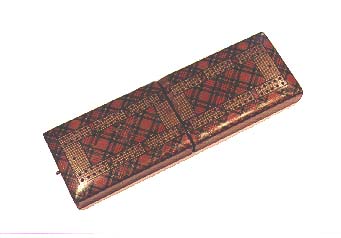 The plaid design gives this board a Scotish look.
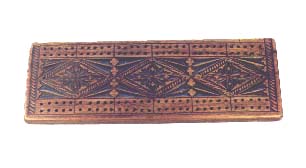 This board is wooden chip carved (13.25" x 4.5").
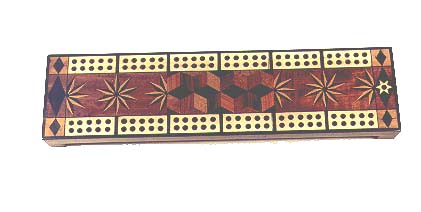 This board has an inlaid star and tumbling block pattern with ivory (12.5" x 3.25").
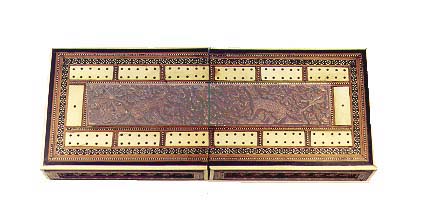 Indian inlaid board with a padauk wood, ivory, silver, and ebony folding box (11.75" x 4.75"). Dates to the 1820s.
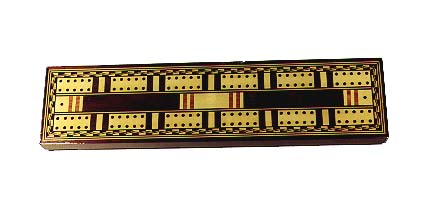 Inlaid wooden ivory board (16" x 4") dates to 1850s.
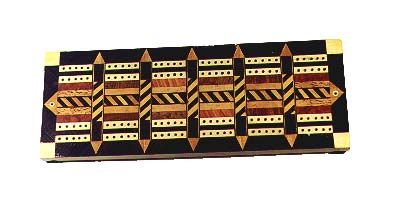 Inlaid multiwood board with ivory, amboyna, satinwood, harewood, rosewood, tigermaple and kingwood (14" x 5.25") dates to the 1820s.
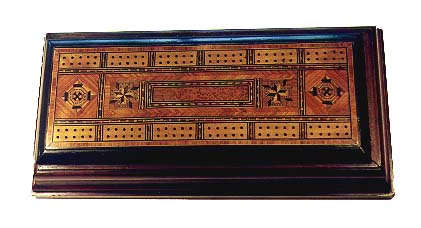 Large inlaid wooden board (16" x 5.25") dates to the 1850s.
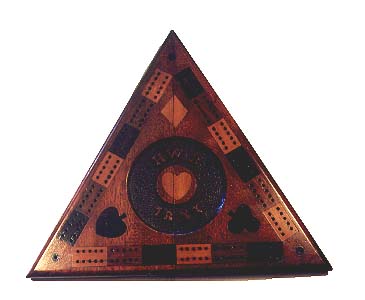 Inlaid wooden triangle board (13" x 13" x 13") dates to 1877.
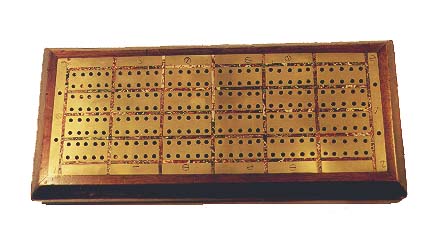 Brass enamel inlaid board (14.5" x 6.5") dates to the 1850s.
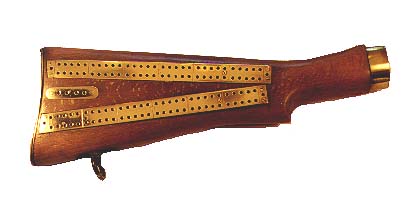 Mahogany board with brass inlay Enfield rifle butt (13.5" x 4.5") dates to the 1870s.
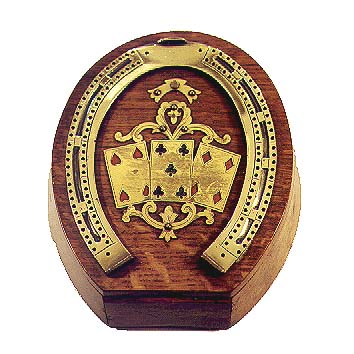 Brass horseshoe spring loaded board (7.5" x 6.5") dates to the 1870s.
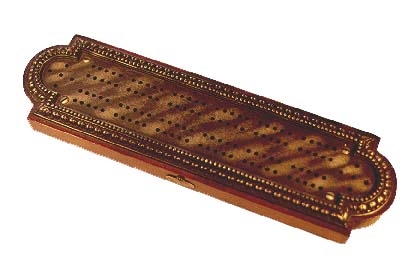
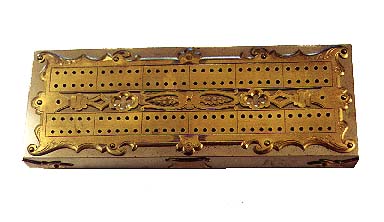 This board is brass plated with nickel and gold (10" x 3.5").
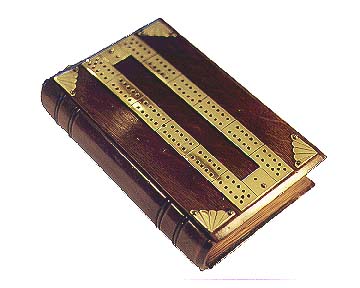 Oak and brass board in the form of a book (8" x 5.25") dates to the 1870s.
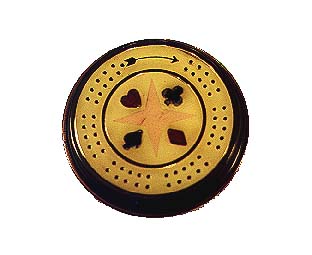 Round inlaid brass board (5" Diameter) dates to the 1860s.
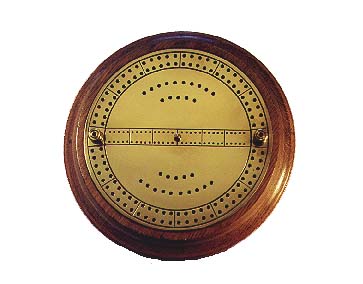 Round oak and brass board (9" Diameter) dates to the 1860s.
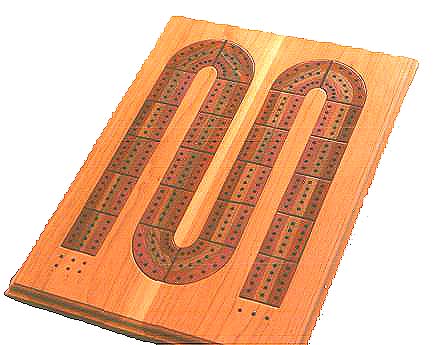 Built by a pegger just like you! Cherry wood base, and inlaid with tracksmade of purpleheart, walnut and paduk (11" x 15").
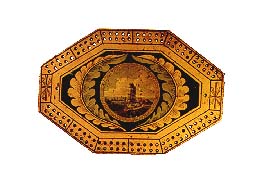 Oval board with hand-painted center.
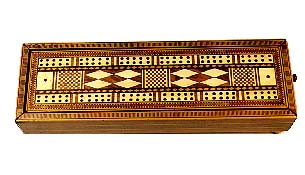 This board is inlaid with ivory, ebony, satinwood and rose wood (11.5" x 3.75") and dates to the 1830s.
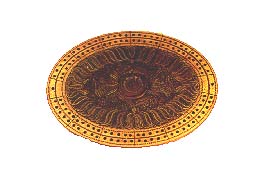 Oval board with pressed and formed paper in the middle.
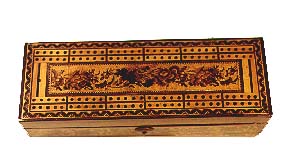 Inlaid Tunbridge box, inlaid on sides (10" x 3.5") dates to the 1860s.
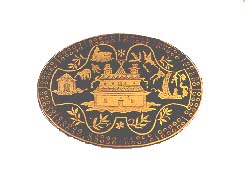 Oval board with two types of wood, one to create oriental design in middle.
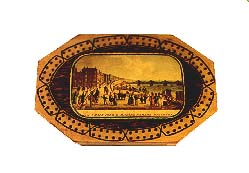 Oval board with hand-painted center.
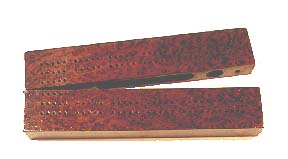 Transfer and Tartan ware box (10" x 3.5") dates to the 1820s.
The information for this board may be incorrect.
Transfer and Tartan ware box (10" x 3.5") dates to the 1820s.
The information for this board may be incorrect.
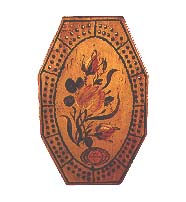 Oval style board with hand-painted center.
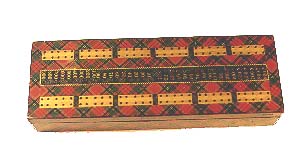 Tartan ware box (10.5" x 3.5") dates to the 1840s.
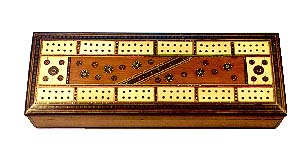 Indian inlaid box (11" x 4") dates to the 1850s.
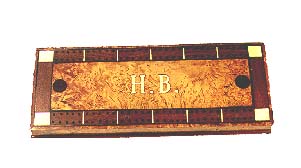 Inlaid with lignum vitae, ebony and bone (10.5" x 4") this board dates to the 1830s.
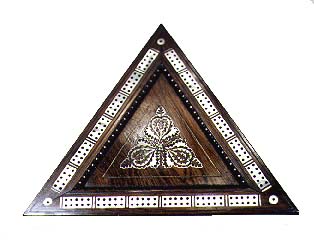 Triangle-shaped board with inlaid pearl.
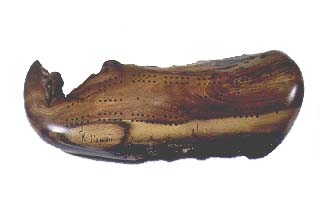 If it looks like a whale it must play like a whale!
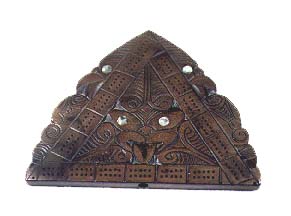 Mahogoney with mother of pearl.
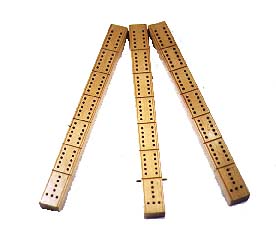 Three-person folding board.
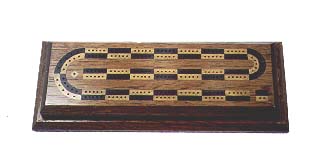
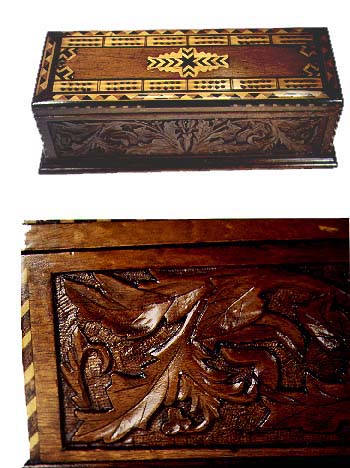 Boxed board set with various types of wood and side view.
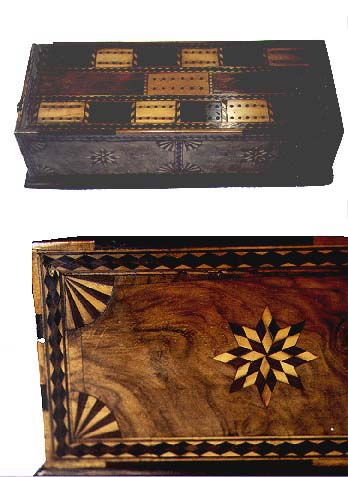 Boxed boards set made of various types of wood and side view.
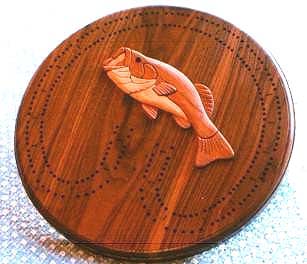 Walnut board. The image on the face is a 3-D intarsia project that was added on the wood.
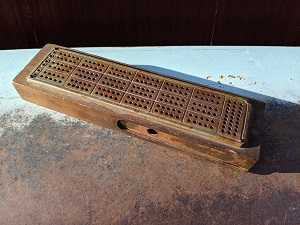 C.W. Le Count three player board, patent number US219280A, issued 1879.
The board was produced from 1879 to 1885, when Le Count received a new patent that included a two player, single track design, and distinguishing marks for each player on both the two and three player versions. (pegs are not original)
C.W. Le Count three player board, patent number US219280A, issued 1879.
The board was produced from 1879 to 1885, when Le Count received a new patent that included a two player, single track design, and distinguishing marks for each player on both the two and three player versions. (pegs are not original)